PRODUCT
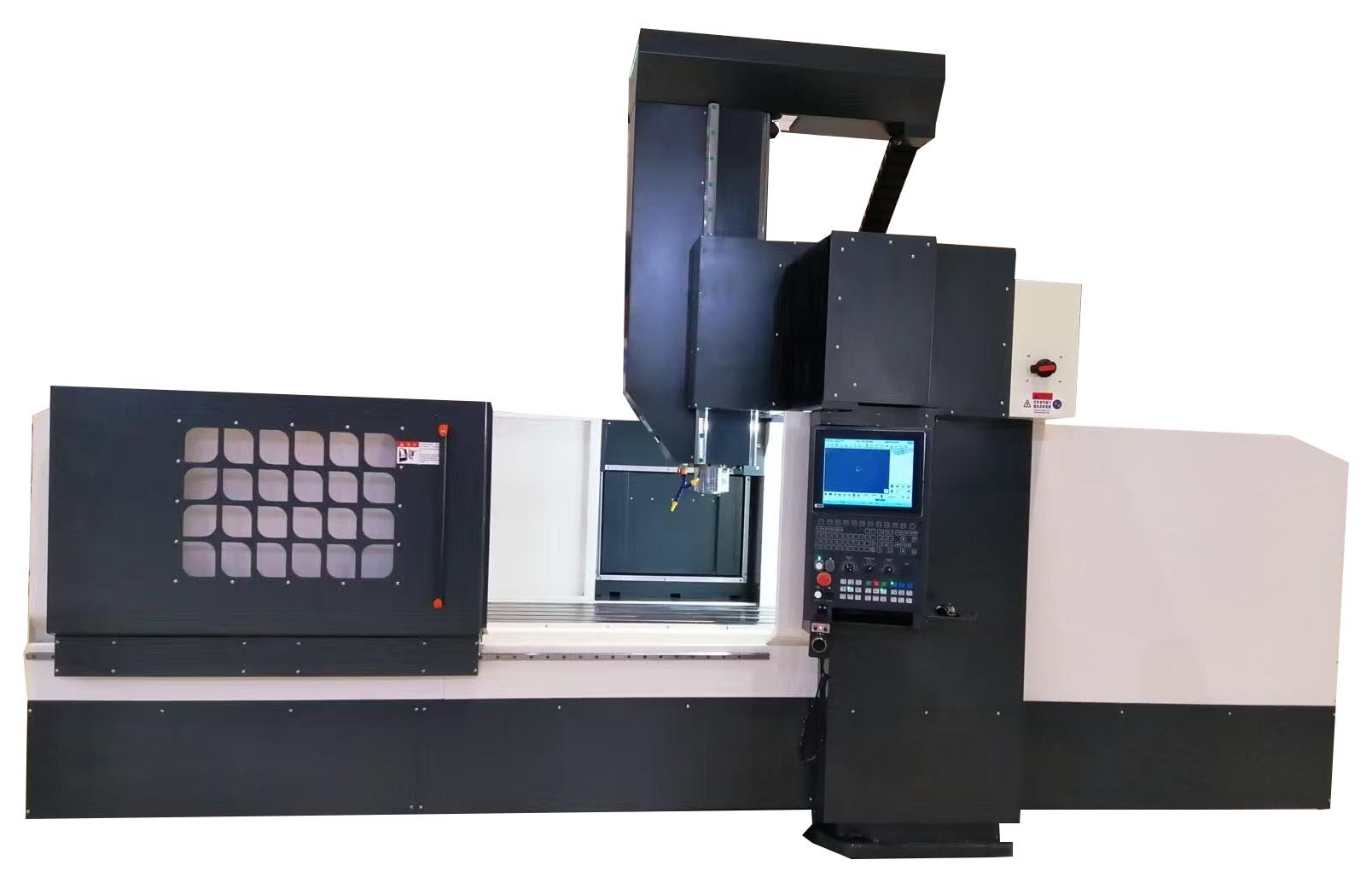
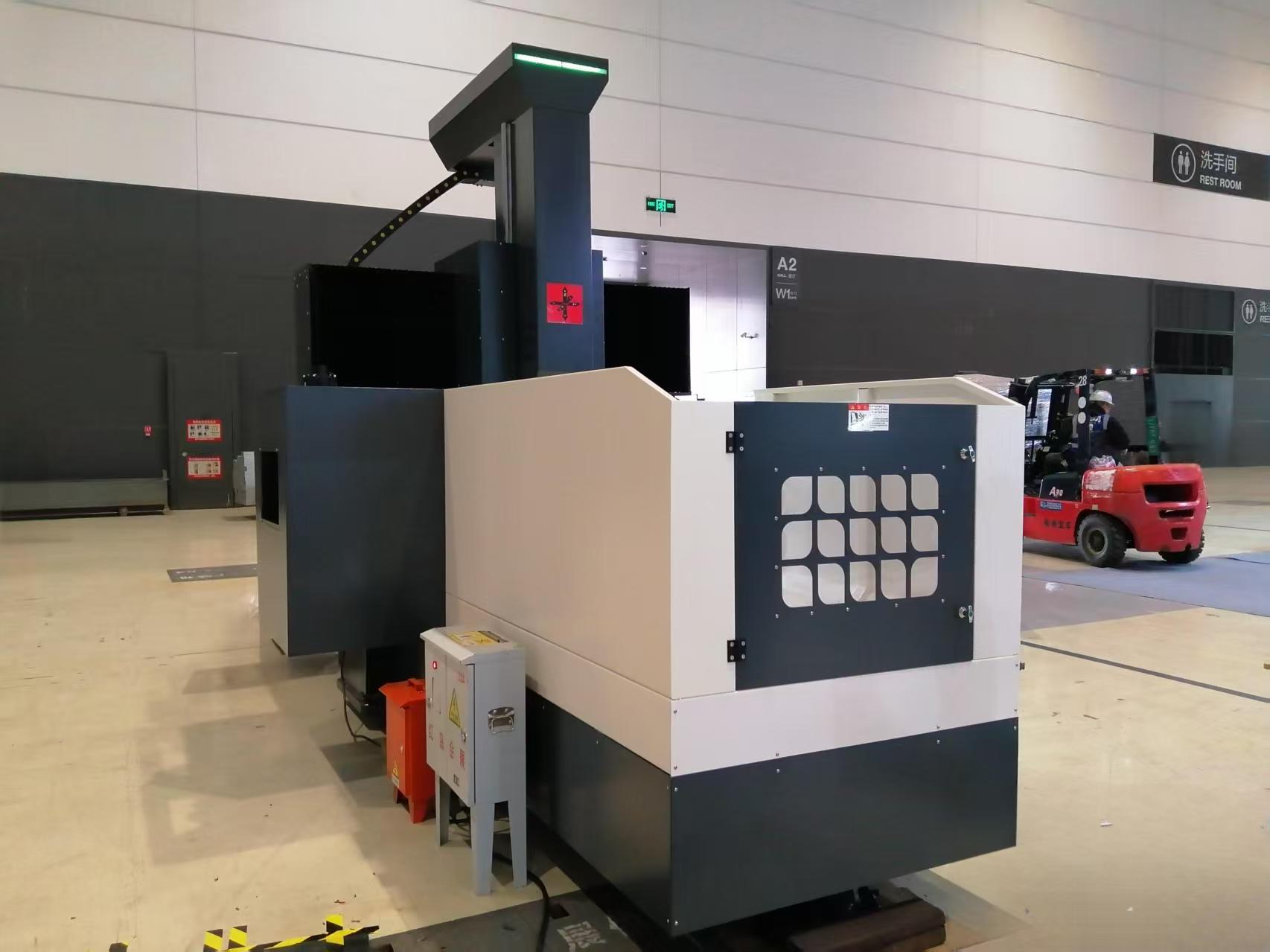
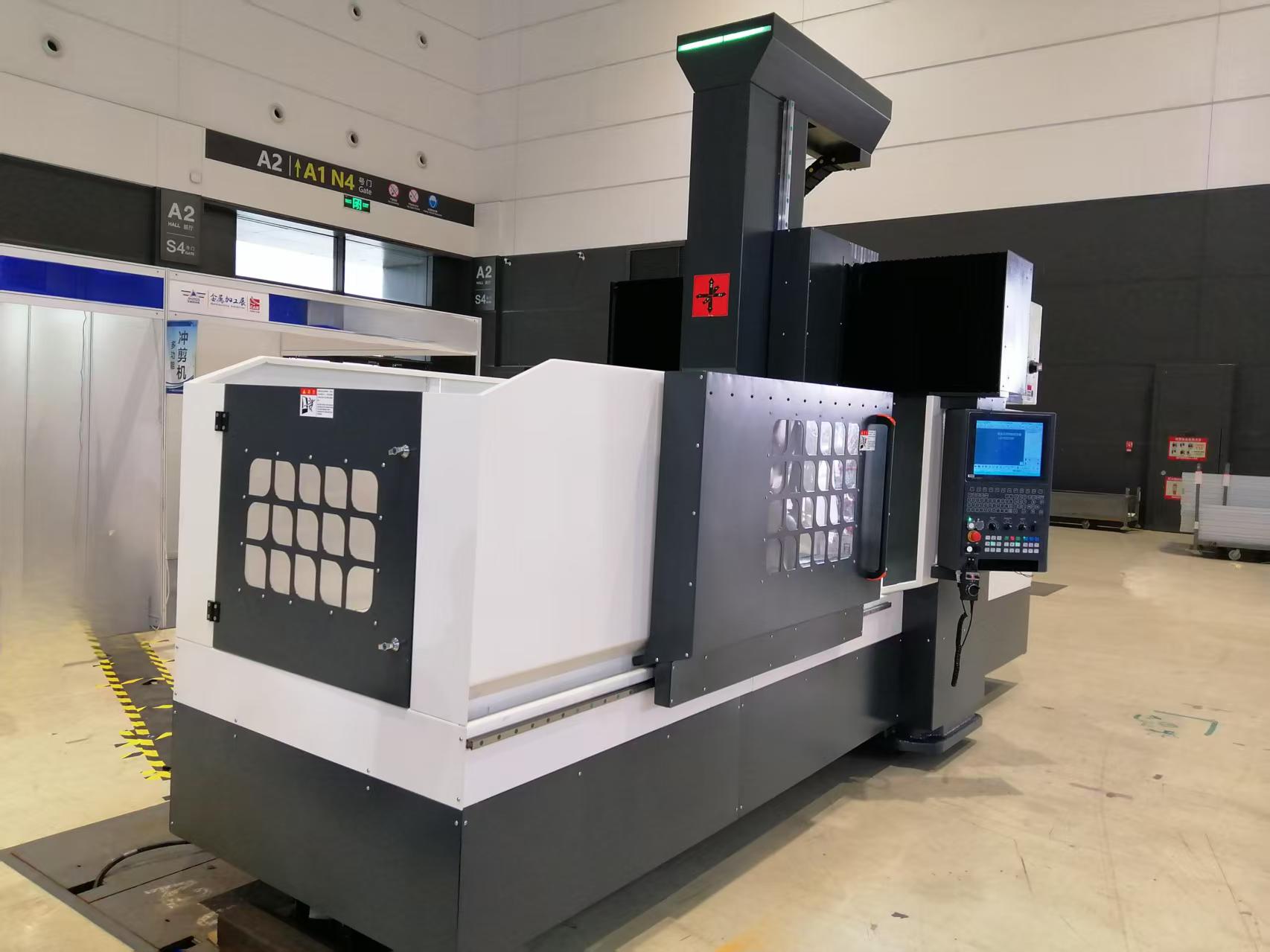
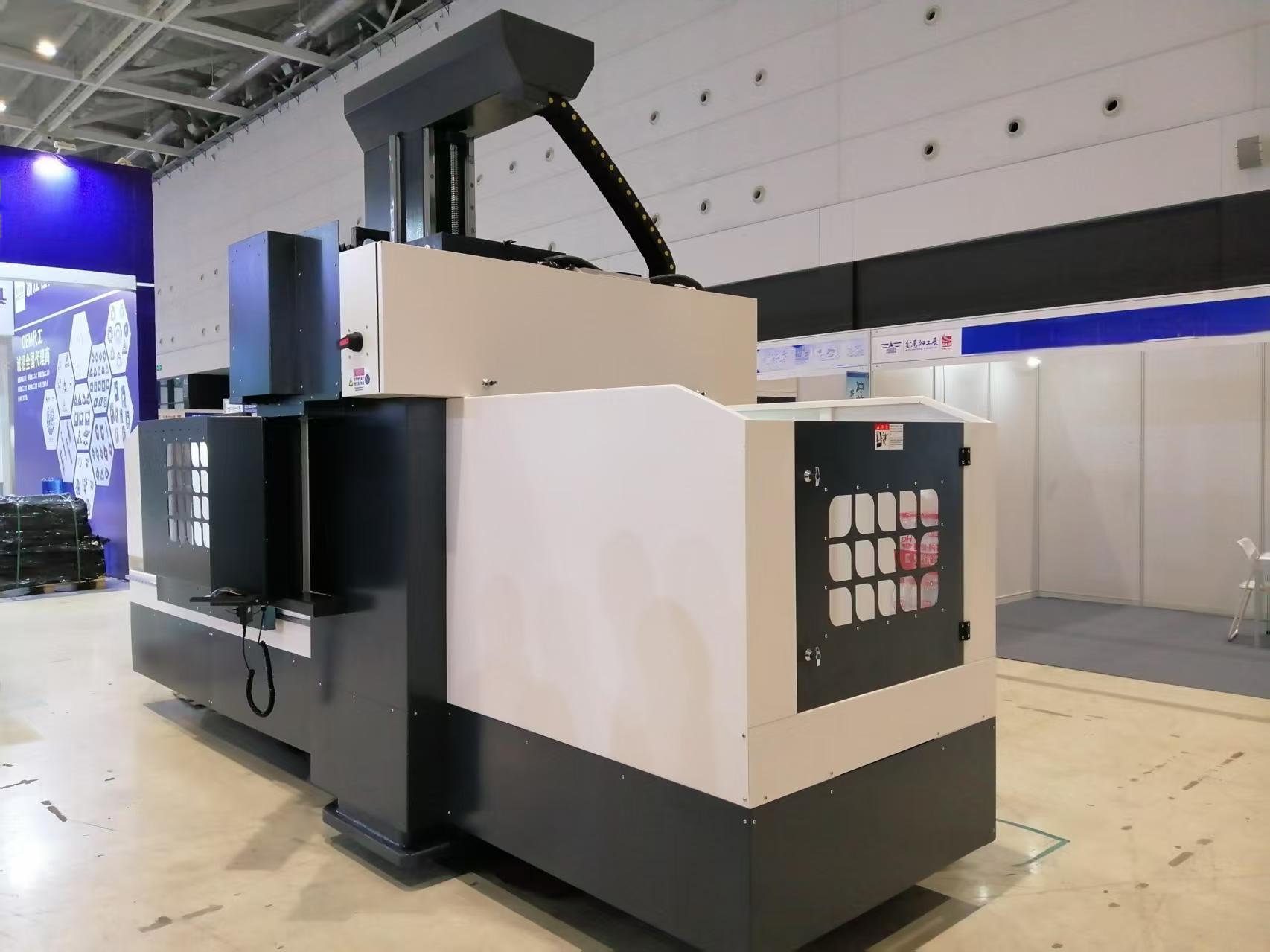
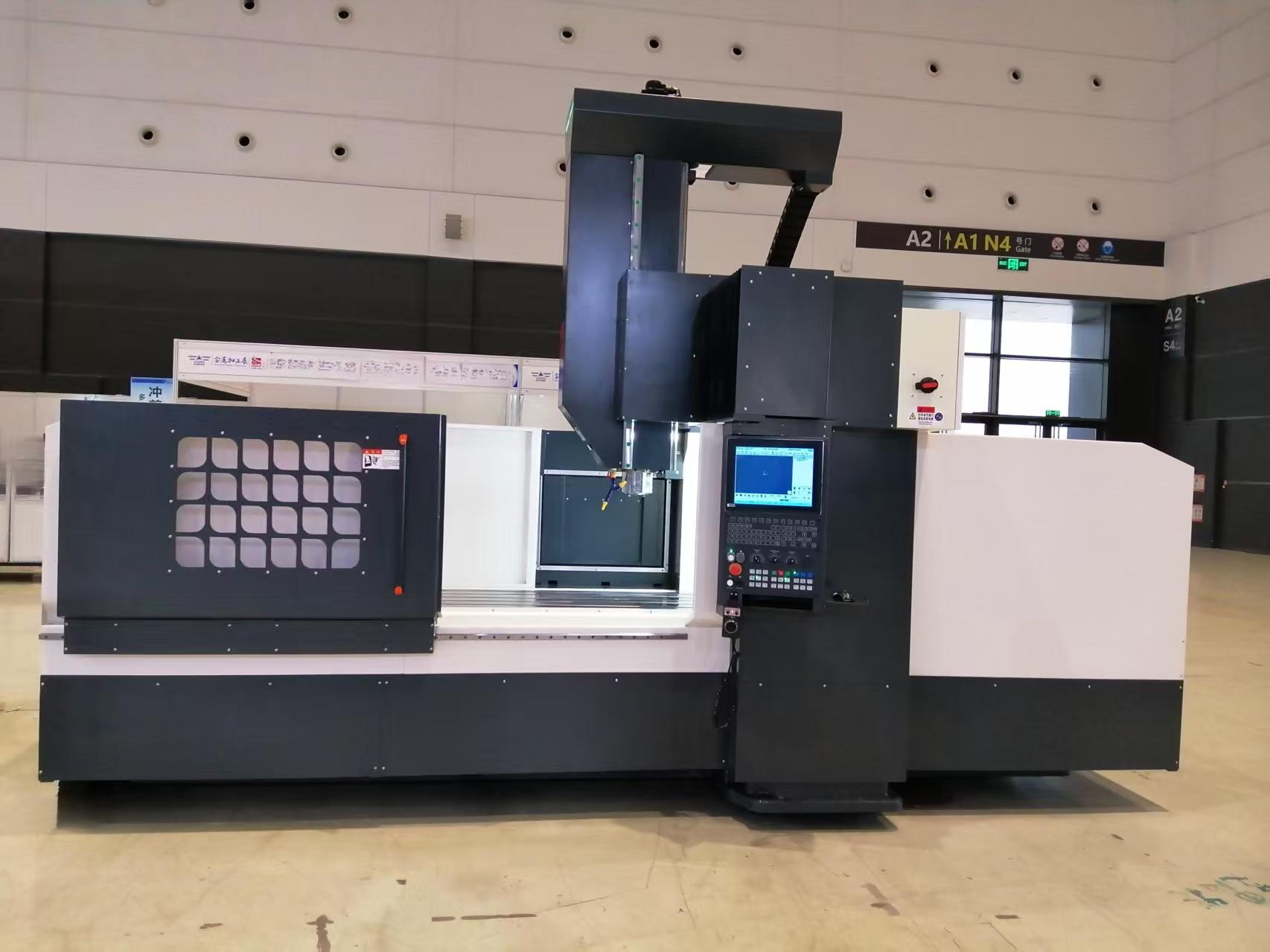
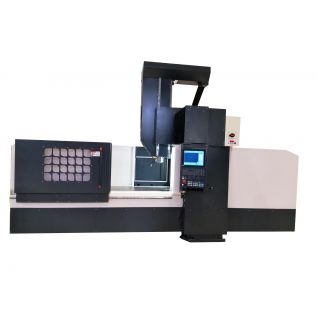
GMC1613 CNC Gantry Milling Machine
The GMC1613 is a double column CNC gantry milling machine with a 2200 × 1300 mm table rated for 3000 kg, travels of 2000 mm in X, 1600 mm in Y and 700 mm in Z, and a 1350 mm gantry width. It is sized for large plates, mould bases, machine beds and welded frames that are too big or too heavy for a vertical machining centre. Overseas after-sales service and CE certified.
GMC1613 CNC Gantry Milling Machine
The GMC1613 is a double column CNC gantry milling machine built for work that a vertical machining centre cannot take: large plates, press and injection mould bases, machine beds and columns, welded frames and long structural parts. The table measures 2200 × 1300 mm and carries 3000 kg, travel is 2000 mm in X, 1600 mm in Y and 700 mm in Z, and the machine weighs 12.5 tonnes. The spindle runs on a cross rail supported at both ends by two columns, so the cutting load is shared instead of being carried by a single overhanging column, and the whole table area stays reachable at consistent rigidity. Face milling, drilling, tapping, pocket milling and boring are completed in one clamping, which keeps hole patterns and machined faces tied to one datum from the first cut to the last.
Key Features
- Working table 2200 × 1300 mm with 3000 kg load capacity
- X axis travel 2000 mm, Y axis travel 1600 mm, Z axis travel 700 mm
- T-slots 7 × 18 × 165 mm for clamps, angle plates and dedicated fixtures
- Cutting feed speed range 7 m/min for heavy roughing as well as finishing passes
- Spindle end face to table distance 120 - 820 mm, giving clearance for tall fixtures
- Gantry width 1350 mm between the two columns
- Machine dimensions 5300 × 3400 × 2800 mm, machine weight 12.5 T
- Suited to large plates, mould bases, machine beds and welded frames
- Spindle, control and tooling configuration quoted against the actual part
Double Column Structure and Where the Rigidity Comes From
On a gantry machine the spindle head rides on a cross rail that is bolted to two columns standing on the same bed. When the cutter is at the far edge of a 2200 mm plate, the reaction force travels up through the rail and down both columns in a closed loop, so the tool tip deflects by a small and roughly constant amount across the full table. A single column machine of similar table size behaves differently: at the outer edge of the part the head sits at the end of a long unsupported arm, it drops and twists under load, and the flatness and parallelism of the machined face change from one side of the workpiece to the other. For a mould base whose shut-off faces have to close, or a machine bed whose mounting pads have to stay coplanar, that difference is the difference between a part that assembles and a part that has to be reworked. This is why large work is given to a gantry rather than to an oversized C-frame machine.
2200 × 1300 mm Table and 2000 mm X Travel
The table is 2200 mm long, but X axis travel is 2000 mm. Those numbers are not interchangeable, and the gap decides how a job has to be set up. A workpiece up to roughly 2000 mm long can be machined over its full length in a single clamping. A longer part needs a second clamping position: the datum has to be re-established, the overlap between the two set-ups has to be blended, and the joint has to be checked. That is normal practice on long parts, but it has to be planned and it has to be priced into the job. Across the table, Y travel of 1600 mm covers the 1300 mm table width with enough margin to position the cutter beyond the edge of the workpiece. If your part is longer than 2000 mm, send us the drawing at the quotation stage and we will confirm the set-up sequence up front instead of leaving you to find out once the machine is installed.
Gantry Width, Z Travel and the Real Working Envelope
Three numbers decide whether a part fits on this machine, and each of them has a limit that is smaller than it first appears. The table is 2200 × 1300 mm. The gantry width is 1350 mm, but that is the clear distance between the two columns, not the usable clamping width: the real limit on workpiece width is the 1300 mm table plus whatever the fixture adds, and a part wider than that cannot be swung between the columns no matter what the gantry figure says. Height works the same way. The spindle end face can sit between 120 mm and 820 mm above the table, but only 700 mm of that range is Z axis travel, which is the stroke available for cutting. The 820 mm figure is the maximum clearance for loading and unloading, not a machining height. A part that needs 800 mm of machined height will not fit even though the clearance number suggests it might. We quote these three pairs separately because a customer who plans against the larger figure of each pair orders a machine that cannot reach his part, and it is far cheaper to settle the envelope on the drawing than on the shop floor.
T-Slots, Fixtures and Clamping a 3000 kg Part
The table carries T-slots of 7 × 18 × 165 mm: seven slots, 18 mm slot width, 165 mm pitch between slots. The slot width takes standard T-bolts for clamps and angle plates, and the 165 mm pitch lets a fixture be positioned in fine steps across the table width rather than only at a few fixed points. On a table rated for 3000 kg, work-holding is not a detail. A heavy plate that is clamped at four points will spring when it is released, and a face that was machined flat will no longer be flat once the clamps come off. For parts of this weight we recommend supporting the workpiece over its full footprint on parallels or a machined sub-plate, clamping near the cutting zone rather than at the corners, and roughing before final clamping so that the finishing pass is taken on a part that has already settled. The exact slot dimensions should be checked against the general arrangement drawing for your machine, since slot width and pitch are sometimes changed to suit a customer's existing fixture set.
Milling, Drilling, Tapping and Boring in One Set-Up
The real saving on a gantry machine is not the size of the table, it is that every operation stays on one datum. With a part clamped once on the 2200 × 1300 mm table, the machine face mills the top, drills and taps the mounting holes, mills pockets and bores bearing seats without the workpiece being released and re-indicated between operations. Every re-clamping of a part weighing up to 3000 kg introduces a new error: the part settles onto the fixture, the datum moves, and a hole pattern cut after re-clamping no longer lines up with the face machined before it. Doing the work in one set-up removes that error at the source rather than trying to correct it afterwards. For deep pockets and long boring bars, the 120 mm minimum spindle-to-table distance lets the head come down close to the work, which keeps the tool short, the overhang small and the cut rigid.
Applications and Materials
The GMC1613 is used in mould and die shops, machine tool building, general machinery, automotive tooling, energy equipment, railway components and heavy fabrication. Typical parts are press and injection mould bases, die plates, machine beds and columns, welded frames, bearing housings, large flanges and structural components that combine machined faces with hole patterns. It machines carbon steel, alloy steel, stainless steel, cast iron, aluminium and copper alloys, with cutting data set by the material, hardness, fixture rigidity and surface finish requirement. Where a part is too large or too heavy for a vertical machining centre, this class of machine keeps the work in-house instead of sending it out for subcontract milling and losing both the lead time and the tolerance chain.
Technical Specifications
| Model | GMC1613 |
| Working table size | 2200 × 1300 mm |
| Table load capacity | 3000 kg |
| T-slot (number × width × pitch) | 7 × 18 × 165 mm |
| X axis travel | 2000 mm |
| Y axis travel | 1600 mm |
| Z axis travel | 700 mm |
| Cutting feed speed range | 7 m/min |
| Spindle end face to table distance | 120 - 820 mm |
| Gantry width | 1350 mm |
| Machine dimensions (L × W × H) | 5300 × 3400 × 2800 mm |
| Machine weight | 12.5 T |
Delivery, Installation and Service
The machine ships as a complete unit measuring 5300 × 3400 × 2800 mm and weighing 12.5 T, so crane capacity, floor loading, door width and the route into the workshop should all be checked before delivery is booked. Installation is supported with foundation and levelling guidance, commissioning checks, and operator training on the control and on work-holding for large plates. Spare parts and technical support are handled through our overseas after-sales service, and the machines are CE certified. Spindle speed range, spindle power, taper, tooling and control configuration are specified against the actual workpiece and cutting process and confirmed in the quotation, rather than being assumed from a generic catalogue list.
Request a Quote
Send us the part drawing, the material, the batch size and the operations you need, and we will confirm the GMC1613 configuration, the work-holding arrangement, the price, the delivery time and the technical support. We provide overseas after-sales service and CE certified machines.