PRODUCT
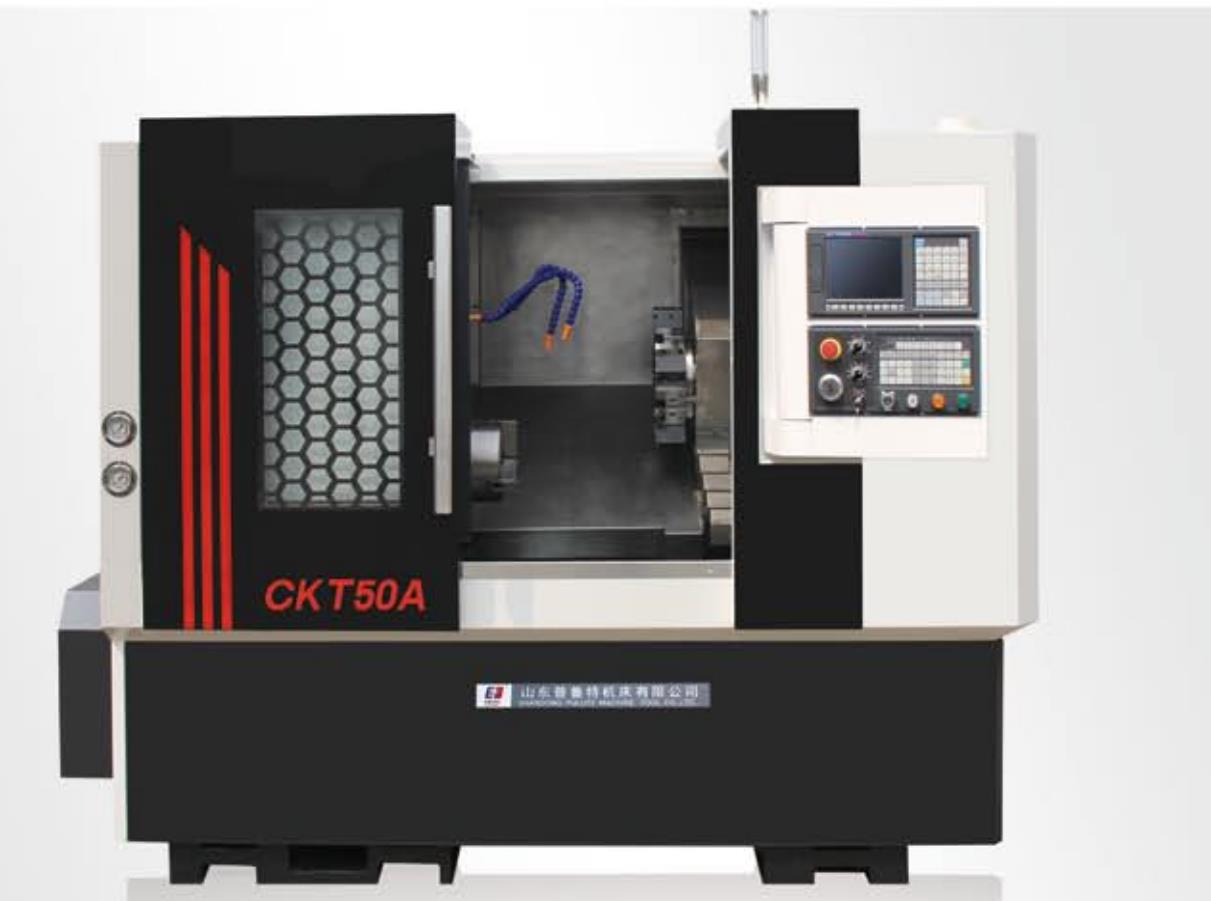
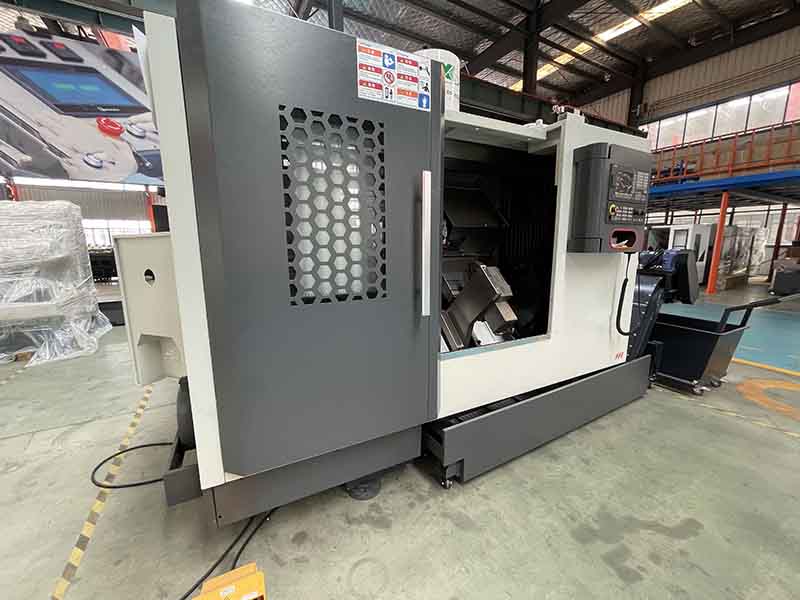
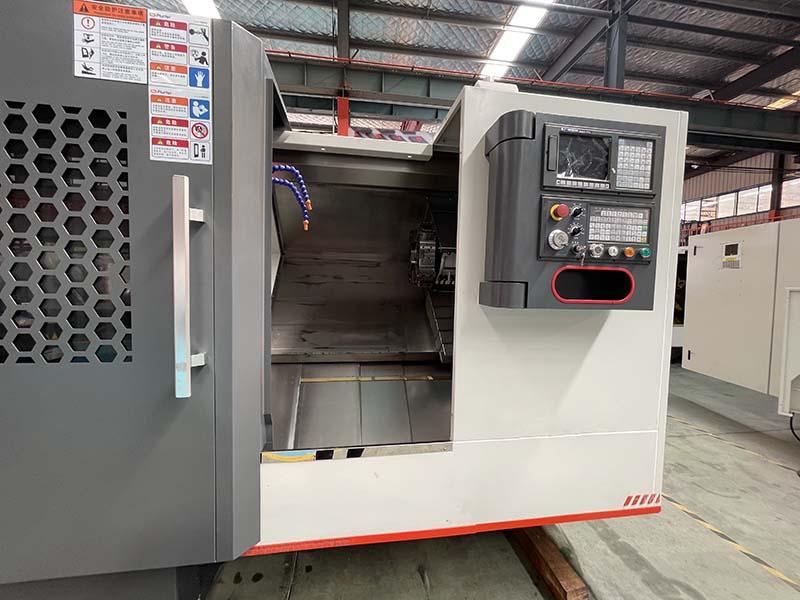
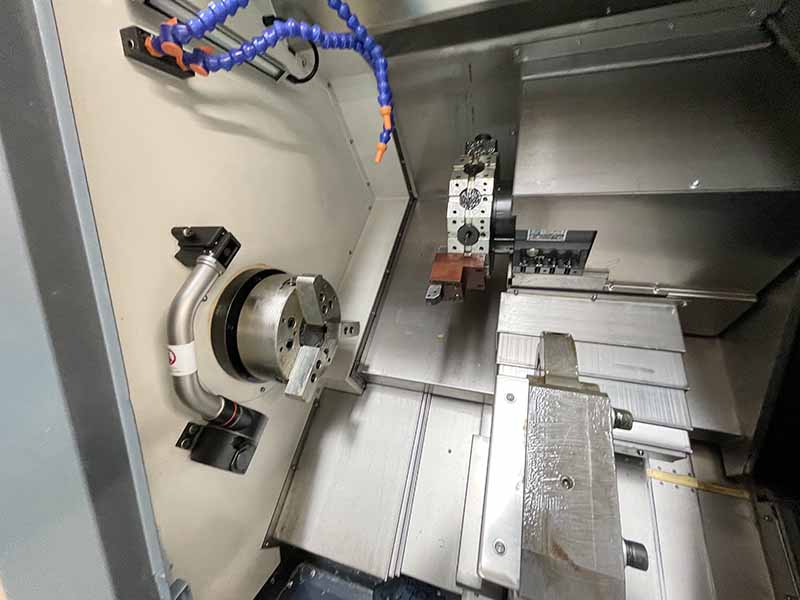
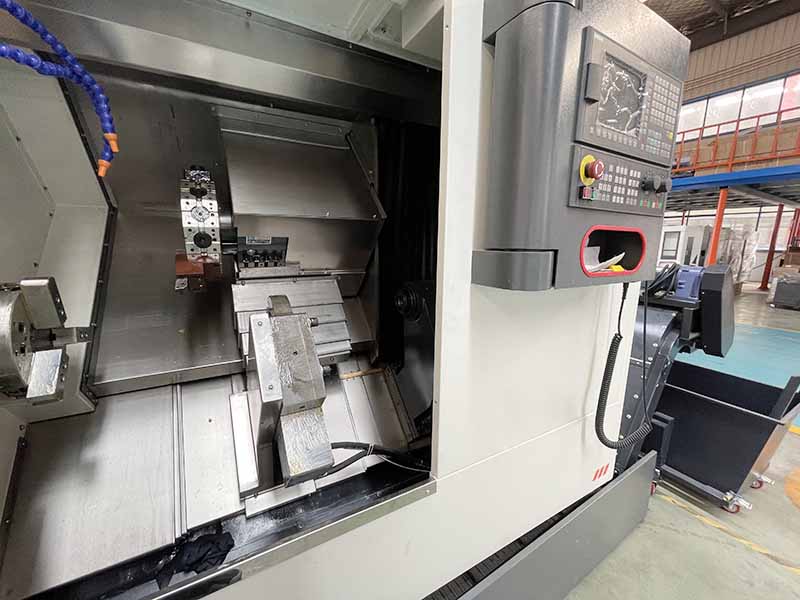
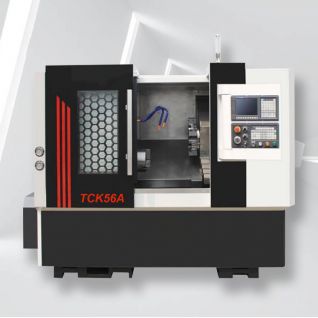
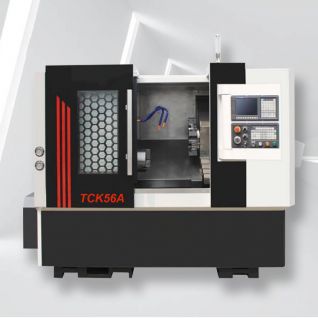
TCK56A Slant Bed CNC Lathe
The TCK56A is a 45-degree slant bed CNC lathe for disc and short-shaft parts: Φ560 mm swing over the bed, Φ300 mm over the slide, 500 or 1000 mm machining length and a 4000 rpm spindle with a Φ65 mm bore. CE certified, with installation and overseas after-sales support.
TCK56A Slant Bed CNC Lathe
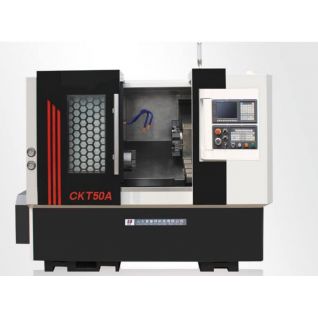
The TCK56A sits between the TCK50A and the larger turning centres in our 45-degree slant bed range. Its defining figure is not the bed swing but the slide swing: Φ300 mm over the slide, which is 40 mm more working diameter than the TCK50A and, in practice, the number that decides whether a part fits.
Two bed lengths are built on the same platform — 500 mm and 1000 mm. The machine is CE certified, ships with a complete manual and electrical set, and is backed by our overseas after-sales service network.
Key Features
- Φ300 mm swing over slide — the working limit with the tool mounted. This is the figure to design the process around.
- Φ560 mm swing over bed — clearance for odd-shaped castings and faceplate work, not a machining capacity.
- 4000 rpm spindle — the highest top speed in this frame size, useful on small diameters and aluminium.
- Φ65 mm spindle bore — continuous bar work up to Φ65 mm through the spindle.
- 500 / 1000 mm machining length — short bed for disc work, long bed for shaft work, same platform.
- 4250 kg of cast structure — mass behind the cut, so finish does not depend on light passes.
- 45-degree slant bed — chips fall clear of the guideways instead of being dragged across them.
Φ560 Over the Bed, Φ300 Over the Slide
These two numbers are not interchangeable, and quoting only the larger one is how a machine gets bought for work it cannot do. The Φ560 mm over the bed is a clearance figure: the largest blank that will physically rotate over the bed. The Φ300 mm over the slide is the working figure: with the tool mounted, this is the diameter you can actually turn.
The gap on the TCK56A is 260 mm. That clearance is what lets you chuck an off-centre casting or mount a part on a faceplate without hitting the bed. It is useful, but it is not capacity. Plan against Φ300 mm.
If your part needs more than Φ300 mm turned diameter, send the drawing before you order. A larger model on the same platform is the honest answer, and we will say so rather than let the machine arrive undersized.
Two Bed Lengths: 500 mm and 1000 mm
The TCK56A is listed with 500 mm and 1000 mm machining length on a common 45-degree bed. The standard machine is the 500 mm version; the 1000 mm version is the long-bed variant on the same platform.
Bed length is not a free option. The overall machine length goes from 2950 mm to 3450 mm — exactly the 500 mm difference in machining length, because the extra bed is the extra travel. A longer bed also adds the deflection that comes with any longer cantilever, which is why the long variant is specified for shaft work rather than treated as a universal upgrade.
Choose by the parts you run most, not by the longest part you might run once. If most of your work is under 500 mm, the short bed holds tolerance better on those parts and takes less floor space. If you routinely run 700-900 mm shafts, take the 1000 mm version and accept the larger footprint.
The weight figure in the table, 4250 kg, is the platform nominal. Confirm the exact figure for your variant on the quotation — we do not quote a weight we have not confirmed for the configuration being built.
4000 rpm Spindle and Φ65 mm Bore
The spindle tops out at 4000 rpm, which is the highest in this frame size and the reason the model suits small-diameter and aluminium work. Top speed is not a cutting recommendation, though. Surface speed is diameter times rpm: a Φ30 mm part at 4000 rpm runs at about 377 m/min, right in carbide finishing range for steel. The same 4000 rpm on a Φ200 mm part would be over 2500 m/min — far past anything steel will take, so on large diameters you run well below the top speed.
Treat 4000 rpm as headroom for small parts and aluminium, and set steel cutting speeds from the insert data as usual. A spindle that can reach 4000 rpm and be held at 1200 rpm all shift is more useful than one that is only stable at its maximum.
The Φ65 mm bore puts continuous bar work up to Φ65 mm within reach: stock feeds through the spindle, the part is cut off, the cycle repeats. For bar above Φ65 mm, the bar has to hang out of the chuck, and that changes the tooling and the cycle time — tell us the stock diameter before quoting.
Why a Slant Bed Matters in Production
On a flat bed lathe, chips land on the guideways and stay there. On a part running in a production cycle, that means abrasive swarf being dragged across a precision surface hundreds of times per shift. A slant bed lets chips fall into the chip pan, which keeps the guideways clean and holds accuracy over months instead of weeks.
The slant layout also brings the spindle and turret closer to the operator, which shortens setup and tool change time. On disc parts with short cycle times, that handling time is a larger share of cost per piece than the cutting itself.
Applications and Typical Parts
The TCK56A is used where disc-type and short-shaft parts are turned in quantity:
- Hydraulics and pneumatics — valve bodies, manifolds, cylinder end caps, union flanges
- Bearings and transmission — bearing housings, bearing seats, gear blanks, bushings
- Automotive — hubs, brake components, sensor housings, flanged shafts
- General engineering — flanges, spacers, pulleys, threaded adaptors, pump bodies
It machines carbon steel, alloy steel, stainless steel, cast iron, brass and aluminium with the appropriate inserts and cutting parameters. For castings and forgings with interrupted cuts, tell us the blank condition so the configuration and tooling are matched to it.
CNC System and Configuration Options
The machine is supplied with a production CNC system and configured against your process. Options typically specified with this model include:
- Chuck type and size — three-jaw, independent four-jaw or collet chuck for bar work
- Bar feeder interface matched to your stock diameter and length
- Turret arrangement, with driven tooling where the process needs cross-drilling or milling
- Tailstock for shaft work, normally specified with the 1000 mm bed
- Parts catcher and chip conveyor for unattended cycles
- Coolant through-tool and high-pressure coolant for deep-hole or stainless work
Configuration drives both cycle time and price. Final specification is confirmed against your drawing and monthly quantity before quoting, so the machine that arrives matches the process you described.
Installation, Commissioning and Support
At around 4250 kg, the TCK56A ships as a complete machine and needs a level floor and a normal industrial power supply, not a special foundation. We supply the foundation drawing, electrical schematic and parameter list before the machine leaves the factory, so site preparation can start while it is in transit.
Commissioning covers levelling, spindle warm-up and runout check, turret alignment, tool setting and a first-part run against your drawing. Training for operators and maintenance staff is included. Our overseas after-sales service network keeps spare parts and technical support available for the working life of the machine, and responds in English, Spanish, Russian or Arabic.
Technical Specifications
| Item | Unit | TCK56A |
| Max. swing dia. over bed | mm | Φ560 |
| Max. swing dia. over slide | mm | Φ300 |
| Max. processing length | mm | 500 / 1000 |
| Spindle speed | rpm | 4000 |
| Spindle hole diameter | mm | 65 |
| Weight | KG | 4250 |
| Machine size | mm | 2950 / 3450 × 1860 × 1850 |
The table lists the platform: two machining lengths, the two machine lengths that go with them, and the corresponding weight. Your quotation will state the exact variant supplied. Note once more that Φ560 mm is swing over the bed (clearance) while Φ300 mm is swing over the slide (working limit) — plan against Φ300 mm.
Why Choose TCK56A
- CE certified — documentation supplied for EU import and site acceptance.
- Overseas after-sales service — engineers and spare parts support in Europe, with response in four languages.
- Φ300 mm working diameter — 40 mm more than the TCK50A, on a frame of the same class.
- 4000 rpm with Φ65 mm bore — small-diameter finishing and bar work on the same machine.
- Two bed lengths, one platform — specify the length your parts need, not the longest one on the list.
- 45-degree slant bed — chips clear the guideways, accuracy holds over months of production.
Send us a drawing, the blank condition and the monthly quantity. We will confirm which TCK56A variant suits the part, quote the configuration, and tell you plainly if another model fits better.