PRODUCT
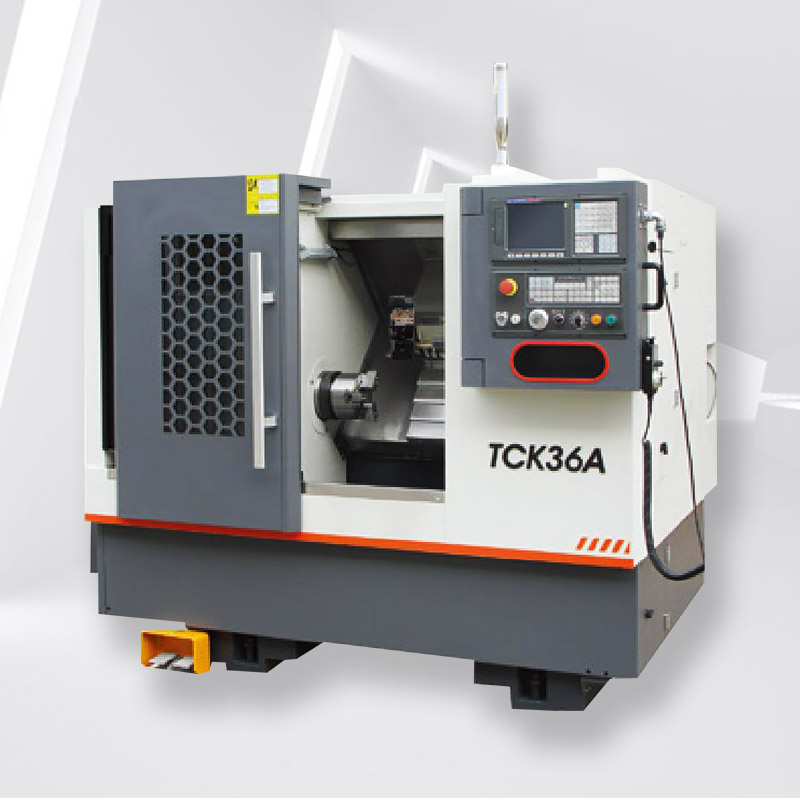
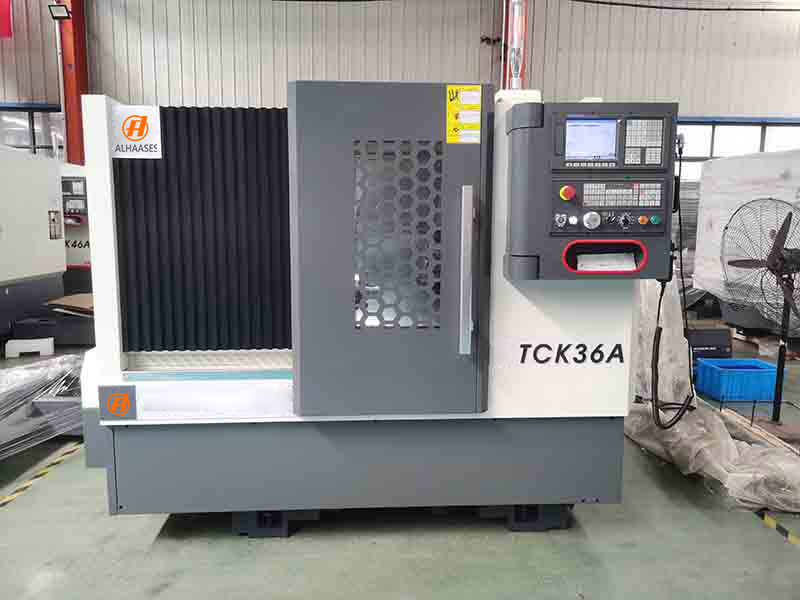
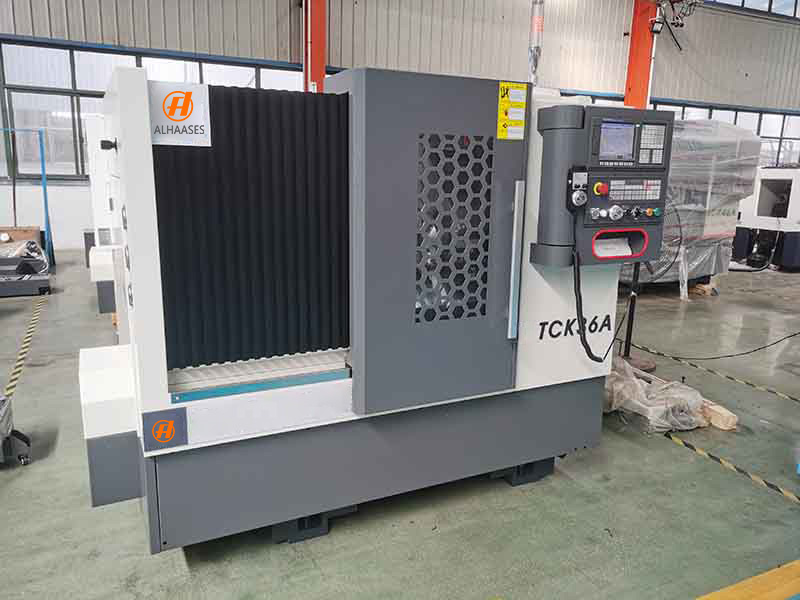
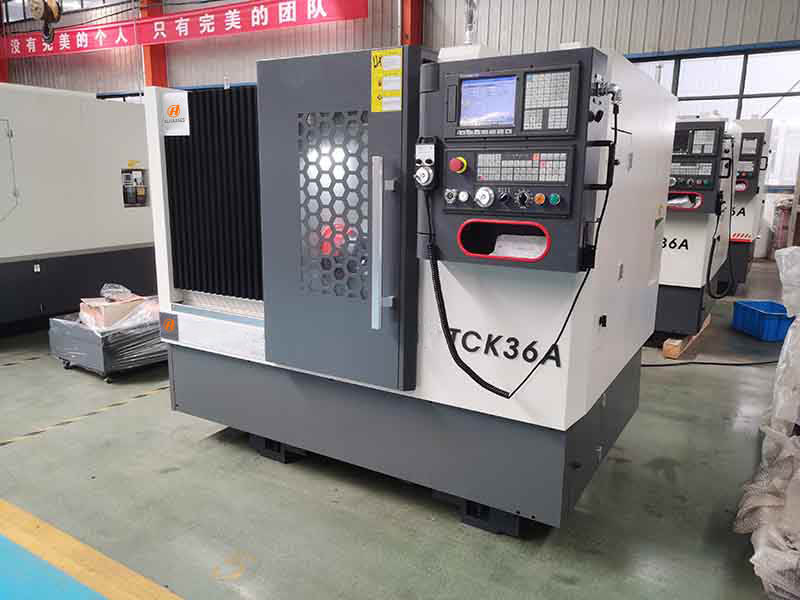
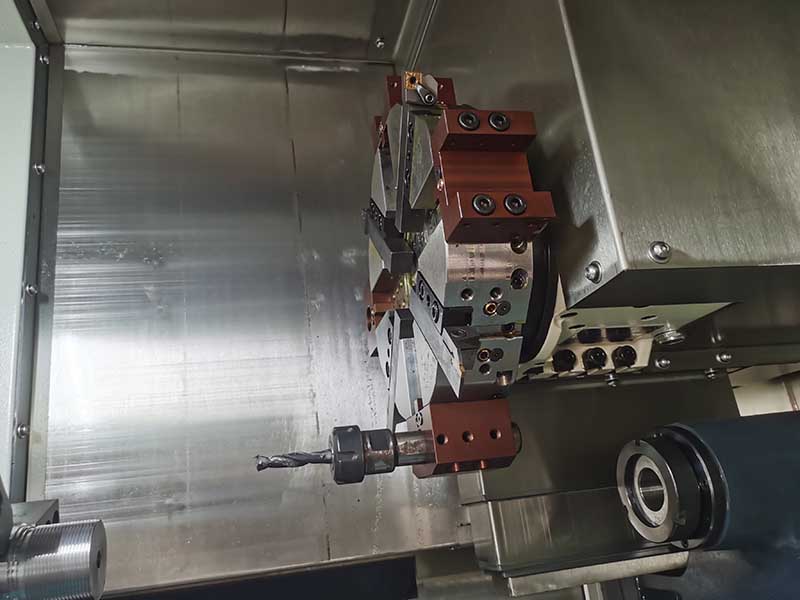
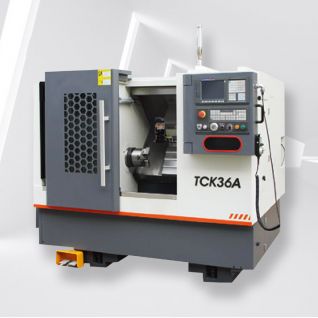
TCK36A Slant Bed CNC Lathe
The TCK36A is a slant bed CNC lathe for small precision parts: Φ360 mm swing over the bed, Φ140 mm over the tool post, 300 mm of machining length and a 4000 rpm spindle with a Φ48 mm bore. CE certified, with installation and overseas after-sales support.
TCK36A Slant Bed CNC Lathe
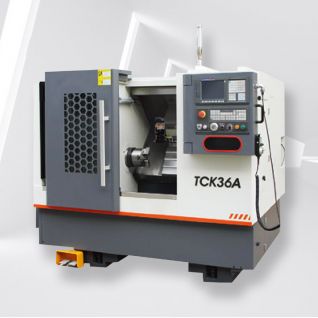
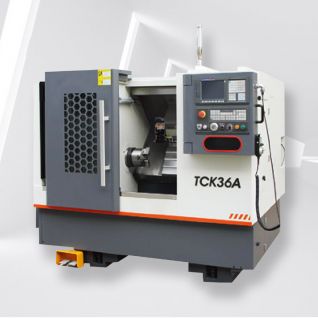
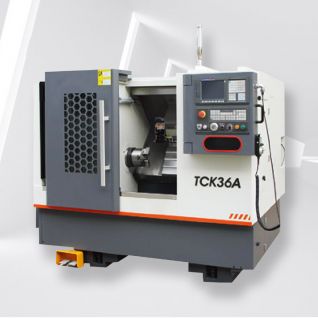
The TCK36A is a slant bed CNC lathe built for small precision parts produced in quantity. It combines a Φ360 mm swing over the bed, a 4000 rpm spindle with a Φ48 mm bore, and 300 mm of machining length on a 2200 kg cast structure — a machine sized for connector bodies, valve parts, fasteners, bushings and instrument components rather than for long shafts.
The machine is CE certified, supplied with a full manual set, and backed by our overseas after-sales service network. Spare parts and technical support remain available for the working life of the machine.
Key Features
- Φ360 mm swing over bed — the bed clears the largest blank the machine will accept.
- Φ140 mm over the tool post — the number that actually defines the working envelope for turning. See the note below.
- 4000 rpm spindle — high enough to run small diameters at correct cutting speed, which is where surface finish comes from.
- Φ48 mm spindle bore — bar stock up to Φ48 mm feeds through the spindle for continuous bar work.
- 300 mm machining length — matched to short parts, keeping the machine compact and the floor space cheap.
- Slant bed structure — chips fall away from the guideways instead of packing into them.
- 2200 kg machine weight — real mass behind a 4000 rpm spindle, so finish does not depend on light cuts.
Φ360 Swing, Φ140 Over the Tool Post — Read Both Numbers
These two figures are not interchangeable, and quoting only the larger one is how a machine gets bought for work it cannot do. The Φ360 mm swing over bed is a clearance figure: it tells you the largest blank that will physically rotate over the bed without fouling. The Φ140 mm over the tool post is the working figure: it is the largest diameter the tool can actually reach and turn.
For the TCK36A, plan your process against Φ140 mm. The Φ360 mm swing is what lets you chuck awkward or off-centre blanks without a riser block — useful, but not a machining capacity.
Why a Slant Bed Matters on Small Parts
On a flat bed lathe, chips land on the guideways and stay there. On a small part running at 4000 rpm in a production cycle, that means abrasive swarf being dragged across a precision surface several hundred times per shift. A slant bed lets chips fall clear into the chip pan, which keeps the guideways clean and holds accuracy over months instead of weeks.
The slant layout also puts the spindle and turret closer to the operator, which shortens setup and tool change time. On short cycle parts, that time is a larger share of total cost per piece than the cutting itself.
4000 rpm for Small Diameter Finishing
Cutting speed is diameter times rpm. At 4000 rpm, a Φ20 mm part runs at roughly 250 m/min — a normal finishing speed for steel with carbide. On a lathe limited to 1500 rpm, the same part runs at under 95 m/min, which is a roughing speed: the finish suffers and the insert wears faster than it should.
This is the practical reason the TCK36A is specified for small parts. High spindle speed is not a headline number here; it is what lets a Φ10–Φ60 mm part reach the surface finish the drawing asks for without a second operation.
Φ48 mm Bore for Bar Work
A Φ48 mm spindle bore puts the TCK36A into continuous bar work: stock feeds through the spindle, the part is cut off, and the cycle repeats without an operator opening the chuck. For small turned parts produced in hundreds or thousands, that removes the loading time from every single piece.
Bar work also holds length consistency better than repeat chucking, because the part is always referenced to the same stop position rather than to how carefully the operator seated it.
300 mm of Machining Length — Where This Machine Fits
300 mm is short by design. A bed long enough for occasional long parts is longer, heavier and more expensive for every part it makes, including the short ones. If your work is mostly under 300 mm, a short-bed machine holds tolerance better because there is less structure to deflect and less bed to thermally grow.
If your parts are regularly longer than 300 mm, this is the wrong model — a longer bed on the same platform is the correct answer, and we will say so rather than sell you into a machine that will not hold your parts.
Applications and Typical Parts
The TCK36A is used wherever small turned parts are made in quantity:
- Hydraulics and pneumatics — valve bodies, spools, connector fittings, union nuts
- Automotive — sensor housings, bushings, shafts, fastener blanks
- Electronics and instruments — connector shells, terminals, instrument spindles
- General engineering — pins, sleeves, spacers, threaded adaptors
It machines carbon steel, alloy steel, stainless steel, brass, aluminium and engineering plastics with the appropriate inserts and cutting parameters.
CNC System and Configuration Options
The machine is supplied with a production CNC system and is configured against your process. Options typically specified with this model include:
- Chuck type and size, including collet chucks for bar work
- Bar feeder interface matched to your stock diameter and length
- Turret or tool post arrangement, driven tooling where the process needs it
- Parts catcher and chip conveyor for unattended short cycles
- Coolant and air blast arrangement for the materials you run
Configuration drives both cycle time and price, so the final specification is confirmed against your drawing before quoting.
Installation, Commissioning and Support
At 2200 kg with overall dimensions of 2200 × 1600 × 1850 mm, the TCK36A ships as a complete machine and does not need a special foundation in a normal workshop. We supply foundation drawings, the electrical schematic and the parameter list before the machine leaves the factory.
Commissioning covers levelling, spindle warm-up and runout check, tool setting and a first-part run. Training for your operators and maintenance staff is included, and our overseas after-sales service network keeps spare parts and technical support available for the working life of the machine.
Technical Specifications
| Item | Unit | TCK36A |
| Max. swing diameter over bed | mm | Φ360 |
| Max. machining diameter over tool post | mm | Φ140 |
| Max. machining length | mm | 300 |
| Spindle speed | rpm | 4000 |
| Spindle bore diameter | mm | Φ48 |
| Machine weight | kg | 2200 |
| Overall dimensions (L×W×H) | mm | 2200 × 1600 × 1850 |
All figures above are for this model as supplied. Note once more that Φ360 mm is swing over the bed (clearance) while Φ140 mm is the maximum machining diameter over the tool post (working capacity). Confirm the final data sheet with us before ordering.
Why Choose TCK36A
- CE certified — documentation supplied for EU import and site acceptance.
- Overseas after-sales service — engineers and spare parts support in Europe.
- 4000 rpm spindle — small parts finished at correct cutting speed, not roughed and re-cut.
- Slant bed — chips clear the guideways, so accuracy is held over months of production.
- Φ48 mm bore — continuous bar work without opening the chuck between parts.
- 2200 kg of structure — mass behind the spindle, not a light frame at high rpm.
Send us a drawing and the monthly quantity. We will confirm whether the TCK36A suits the part, quote the configuration, and tell you plainly if another model fits better.